Guinea Pig Adoption Guide
I still remember spotting Milo and Luca on the SFACC website and immediately deciding they were coming home with me. I started buying supplies before I even adopted them — and I called the shelter multiple times to make sure they were still there (I was NOT losing these two). I rushed to pick them up so fast that my supplies hadn’t even arrived yet, so they spent their first few days in a makeshift cage while I waited for everything to show up. That was the day everything changed. Within a year I’d added Coco and Kai — because apparently I’m the kind of person who builds a whole herd. As an exotic veterinary assistant in San Francisco, I’ve also seen what happens when people adopt without doing their homework. So here’s everything I wish I’d known before Milo and Luca came home with me.
Why Adopt a Guinea Pig?
Okay, I’m biased, but guinea pigs are hands-down the most underrated pets out there. These aren’t the “starter pets” people make them out to be — they’re genuinely affectionate, hilarious little animals who will absolutely steal your heart.
Milo wheeks like a fire alarm the second he hears the refrigerator door open. Luca does this dramatic slow-blink thing when he’s content in my lap. Coco is the diva of the group — he has strong opinions about which vegetables are acceptable and will literally turn his back on you if you offer the wrong lettuce. And Kai? He’s the gentle giant, the peacemaker, always snuggled up against whoever seems to need it most.
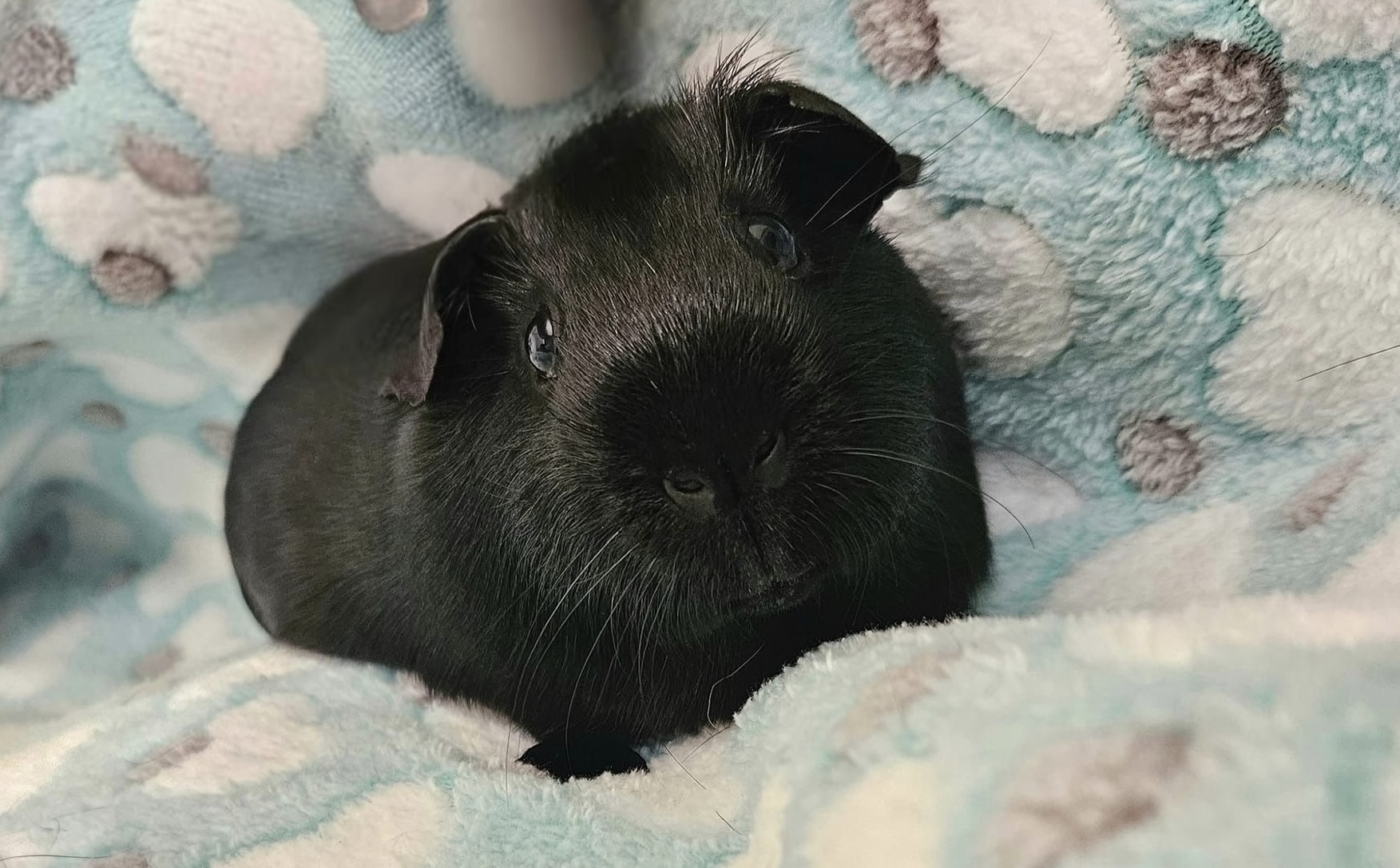 Milo on the day I brought him home — already judging my vegetable choices.
They recognize your voice, they learn your schedule, and they’ll greet you at the cage door like you’re the best thing that’s ever happened to them. With a lifespan of 5 to 7 years, they’re a real commitment — but not the 10-to-15-year commitment of a dog or cat. They’re perfect for families with kids, apartment dwellers, or anyone who wants a companion that won’t destroy your couch but will make you feel absolutely loved by a two-pound fluffball.
One thing I feel really strongly about: always adopt from rescues, not pet stores. Pet store guinea pigs often come from breeding mills with terrible conditions, and buying from stores keeps that cycle going. Rescues are full of healthy, wonderful piggies who need homes — many already socialized and so ready to love you back. That’s where I found every single one of mine.
Where to Adopt Guinea Pigs
If you’re in the San Francisco Bay Area like me, you’ve got some great options! The SF SPCA occasionally has guinea pigs available, and there are dedicated small animal rescue organizations throughout the Bay Area that specialize in rehoming guinea pigs and other small mammals. Search for guinea pig rescues near you — many post their available animals online, which is exactly how I found Milo.
Petfinder.com is also a fantastic resource for finding adoptable guinea pigs in your area. You might find guinea pigs on Craigslist too, from owners who can no longer care for them — just be cautious and ask about the pig’s health history.
When you’re meeting potential piggies, look for:
- Alert, bright eyes with no discharge
- A clean, smooth coat with no bald patches
- Active, curious behavior — a healthy pig should be moving around and interested in you
- Clear breathing with no wheezing or clicking sounds
Trust your gut, too. When Milo walked right up to the edge of his enclosure to sniff my hand, I just knew.
The Real Cost of Guinea Pig Ownership
Let’s get honest about money, because guinea pigs are not as cheap as people assume. I learned some of these numbers the hard way!
- Adoption fee: $25-75 from a rescue
- Cage: $80-200 for a proper C&C (cubes and coroplast) cage — the minimum recommended size is 7.5 square feet for a pair
- Bedding: $315 one-time investment for Clinical Series fleece liners, which last years — versus $240-480 per year for disposable paper or wood bedding (I switched to fleece after my first month and never looked back)
- Hay, pellets, and fresh vegetables: $40-60 per month
- Exotic vet visits: $50-100 per wellness checkup — and you absolutely must find an exotic vet, not a regular dog-and-cat vet
Estimated first-year total: $600-1,000 for a pair of guinea pigs, depending on your choices. Fleece liners pay for themselves within the first year and save money every year after that. Future-you will thank present-you for making that investment upfront.
Your Guinea Pig Supply Checklist
Here’s what I wish someone had told me to have ready before I brought Milo home. I was scrambling on day one, running to the pet store at 9 PM because I didn’t have enough hides (spoiler: they need at least two). Save yourself the stress and get everything set up first!
- A C&C cage or suitable enclosure (see our small mammal resources page for the Critter Colony and other options)
- Fleece cage liners or other safe bedding
- Timothy hay — unlimited supply (this is 80% of their diet, and I mean unlimited — they should always have access)
- Guinea pig pellets fortified with vitamin C (guinea pigs cannot produce their own, which is kind of wild)
- A water bottle and a sturdy food bowl
- At least 2 hides — guinea pigs need places to feel safe, and if you have a pair, they each want their own
- A hay rack to keep hay clean and accessible
- Nail clippers designed for small animals
The First Week: What to Expect
I’m going to be honest with you: your new guinea pigs will be absolutely terrified. That first night with Milo, he hid inside his little wooden house and wouldn’t come out for hours. I sat on the floor next to his cage feeling like the worst pet parent in the world. But here’s the thing — that’s completely normal. They’re prey animals in a brand new environment with unfamiliar everything. Don’t take it personally when they bolt every time you walk by.
Days 1-3: Let them settle in. Keep the cage in a calm area away from loud TVs or high-traffic zones. Don’t try to pick them up yet — just make sure they have fresh hay, water, and vegetables. Talk to them softly so they start learning your voice.
Days 3-5: Sit near the cage and just hang out. I used to read out loud to Milo (yes, really). Offer small pieces of lettuce or bell pepper through the cage bars so they start connecting you with the good stuff.
Days 5-7: Try gentle hand-feeding inside the cage. If they approach you, let them sniff your hand. Whatever you do, don’t grab from above — that mimics a predator and will set your trust-building way back.
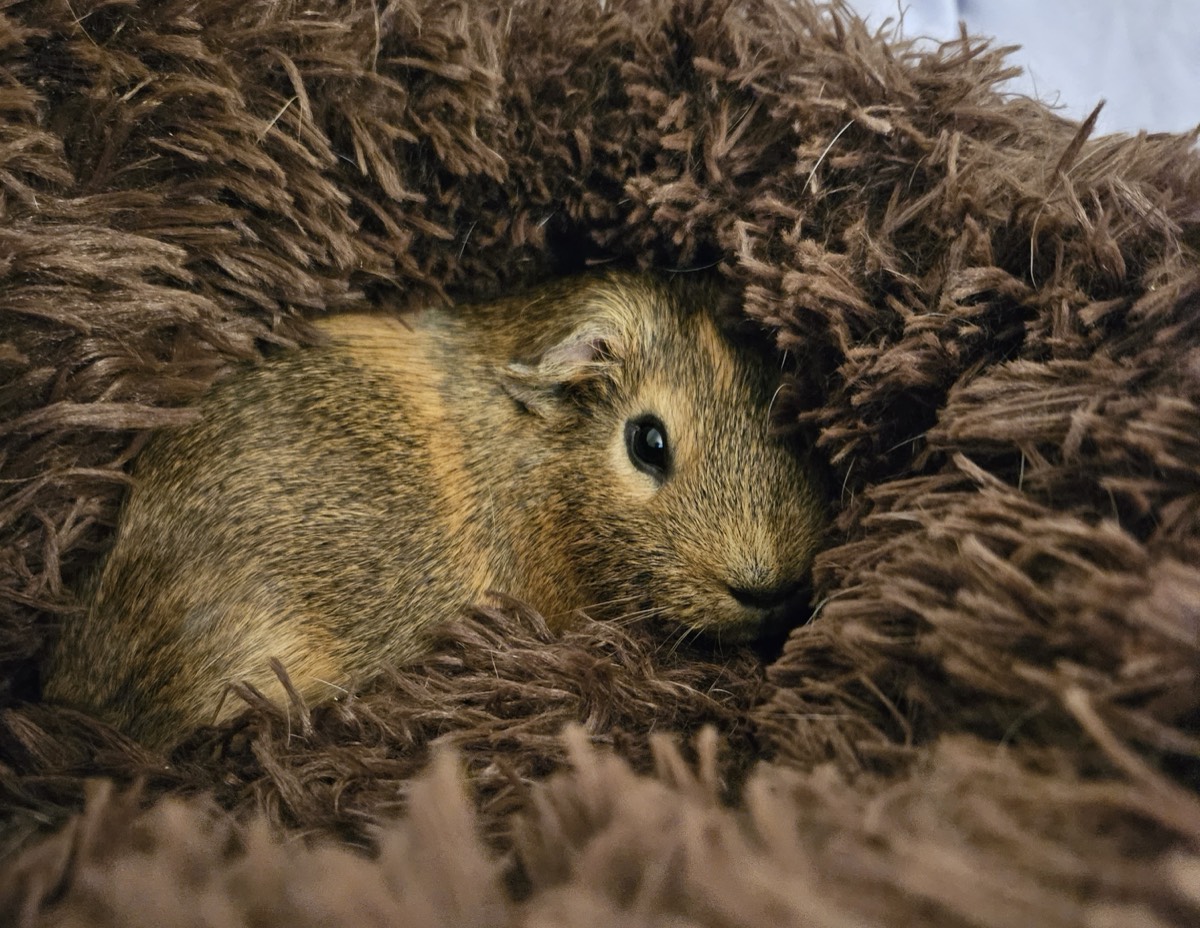 Coco being his fabulous self. He did NOT trust me for the first two weeks and now he falls asleep in my lap.
And if you see your guinea pig suddenly launch into the air, twist, and kick — don’t panic! That’s called “popcorning,” and it means they’re genuinely happy. The first time Milo popcorned, I almost cried. It’s the most joyful thing you’ll ever see a pet do.
Guinea Pigs Need a Friend
This is the hill I will absolutely die on: guinea pigs should always be kept in pairs or small groups. They are herd animals down to their bones, and a solo guinea pig can become depressed, anxious, and even physically ill from loneliness. (In Switzerland, it’s actually illegal to keep just one — they take it that seriously!)
Adopt a same-sex pair, or have one pig neutered if you’re pairing a male and female. When I introduced Luca to Milo, I did it on neutral territory — a floor pen with fresh veggies scattered around to distract them. There was some rumbling and some mounting (totally normal dominance behavior), but within a day they were snuggled together like they’d always been BFFs. Only separate pigs if there’s actual biting that draws blood.
Health Essentials for New Owners
The single most important thing I can tell you — from my experience both as a pig parent and as someone who works in an exotic vet clinic — is to find an exotic vet before you need one. The first time I needed to rush Coco to the vet for a respiratory issue, I was so grateful I already had a vet I trusted. Don’t wait until there’s an emergency to discover that your regular vet doesn’t treat guinea pigs. We maintain a list of Bay Area exotic veterinarians to help you get started.
Other health essentials:
- Weekly weight checks — buy a simple kitchen scale and weigh each pig at the same time every week. A drop of more than 2 ounces in a week is a red flag. I weigh mine every Sunday morning — it’s part of our routine now.
- Learn the warning signs — know the 5 signs your guinea pig needs a vet so you can act fast when something is off.
- Know what an emergency looks like — read our guide on exotic pet emergency signs so you’re never caught off guard.
Ready to Adopt?
If you’ve made it this far, I think you’re ready. Honestly, bringing Milo home was one of the best decisions I’ve ever made — and then Luca, Coco, and Kai each made my life even fuller. These little guys give back so much more than they ask for. Start with the right setup, find your exotic vet, stock up on timothy hay, and give your new pigs all the time and patience they need. They’ll reward you with wheeks, popcorns, and a bond that surprises everyone who thinks small pets can’t be affectionate. (Spoiler: they absolutely can.)
For a deeper dive into ongoing care, check out our complete guinea pig care guide. You can also explore our small mammal resources page for cage recommendations, supply links, and more, or learn about our pet care services if you’re in the San Francisco area and need someone who truly gets these little fluff balls.