Guinea Pig vs Rabbit vs Hamster
So you’re thinking about getting a small pet and you’ve narrowed it down to the big three: guinea pigs, rabbits, or hamsters. I get it — they’re all adorable, they all fit in an apartment, and they all seem “easy.” But having lived with guinea pigs and rabbits at the same time (and cared for plenty of hamsters as an exotic veterinary assistant), I can tell you these are three very different animals. I’m Alexandria, and I share my San Francisco home with four guinea pigs — Milo, Luca, Coco, and Kai — and two rabbits: Puppy Dog and (lovingly) Big Chungus. Let me tell you what it’s actually like.
Full disclosure: I’m a guinea pig person at heart. But I genuinely love all three species, and I’ll give you the honest breakdown so you can make the right call for your household.
The Quick Comparison
| Factor | Guinea Pig | Rabbit | Hamster |
|---|---|---|---|
| Lifespan | 5–7 years | 8–12 years | 2–3 years |
| Space needed | 10.5+ sq ft | 12+ sq ft (free-roam ideal) | 600+ sq in |
| Social needs | Must have companion | Can bond with humans or rabbit partner | Solitary (most species) |
| Handling | Gentle, tolerant | Can be trained, litter-boxable | Fragile, nocturnal |
| Noise level | Vocal (wheeks, purrs) | Quiet (occasional thumps) | Quiet (wheel running at night) |
| Vet costs | Moderate (exotic vet) | Higher (spay/neuter needed) | Lower but still exotic vet |
| Activity | Daytime (crepuscular) | Dawn/dusk (crepuscular) | Nighttime (nocturnal) |
| Monthly cost | $40–60 | $50–80 | $20–30 |
| Best for | Families, apartments, interactive pet lovers | Experienced owners, free-roam homes | Older kids/adults wanting low-commitment pet |
Now let’s get into what it’s actually like living with each of these animals — because numbers on a chart only tell you so much.
Guinea Pigs: The Social Butterflies
Guinea pigs are, hands down, the most interactive small pet I’ve ever worked with. They don’t just tolerate you — they want you around. Milo, my oldest, starts wheeking the second he hears me open the fridge. It doesn’t matter if I’m grabbing lettuce or leftover pizza — he’s convinced it’s for him. That pig is purely driven by food, and honestly, I respect it.
 Milo, mid-wheek, almost certainly convinced I have bell peppers.
The biggest thing to know about guinea pigs is that they must be kept in pairs or groups. A single guinea pig is a lonely guinea pig, and loneliness causes real health problems in this species. I keep mine in a group of four, and watching them interact is half the fun. Coco is the boss. Kai is the baby who tries to steal everyone’s hay. Luca just wants to nap in peace. They have real dynamics and genuine personalities — it’s like a little soap opera in a C&C cage.
Guinea pigs are crepuscular, meaning they’re most active during the day with bursts at dawn and dusk. That makes them ideal if you want a pet you can actually hang out with during normal waking hours. They’re gentle and rarely bite, which makes them one of the best small pets for families with supervised children.
One unique quirk: guinea pigs cannot manufacture their own vitamin C, so they need daily supplementation through fresh vegetables (bell peppers are a favorite in my house) and sometimes a liquid supplement. It’s an extra step, but it becomes routine fast.
For a full deep dive, read our complete guinea pig care guide.
Rabbits: The Independent Companions
Rabbits are the longest-lived of the three, with many indoor rabbits reaching 10 to 12 years. That’s a serious commitment — closer to a cat than a hamster in terms of the time you’re signing up for. I knew this going in with Chungus and Puppy Dog, and it’s part of why I love having them. The bond you build over years is something special.
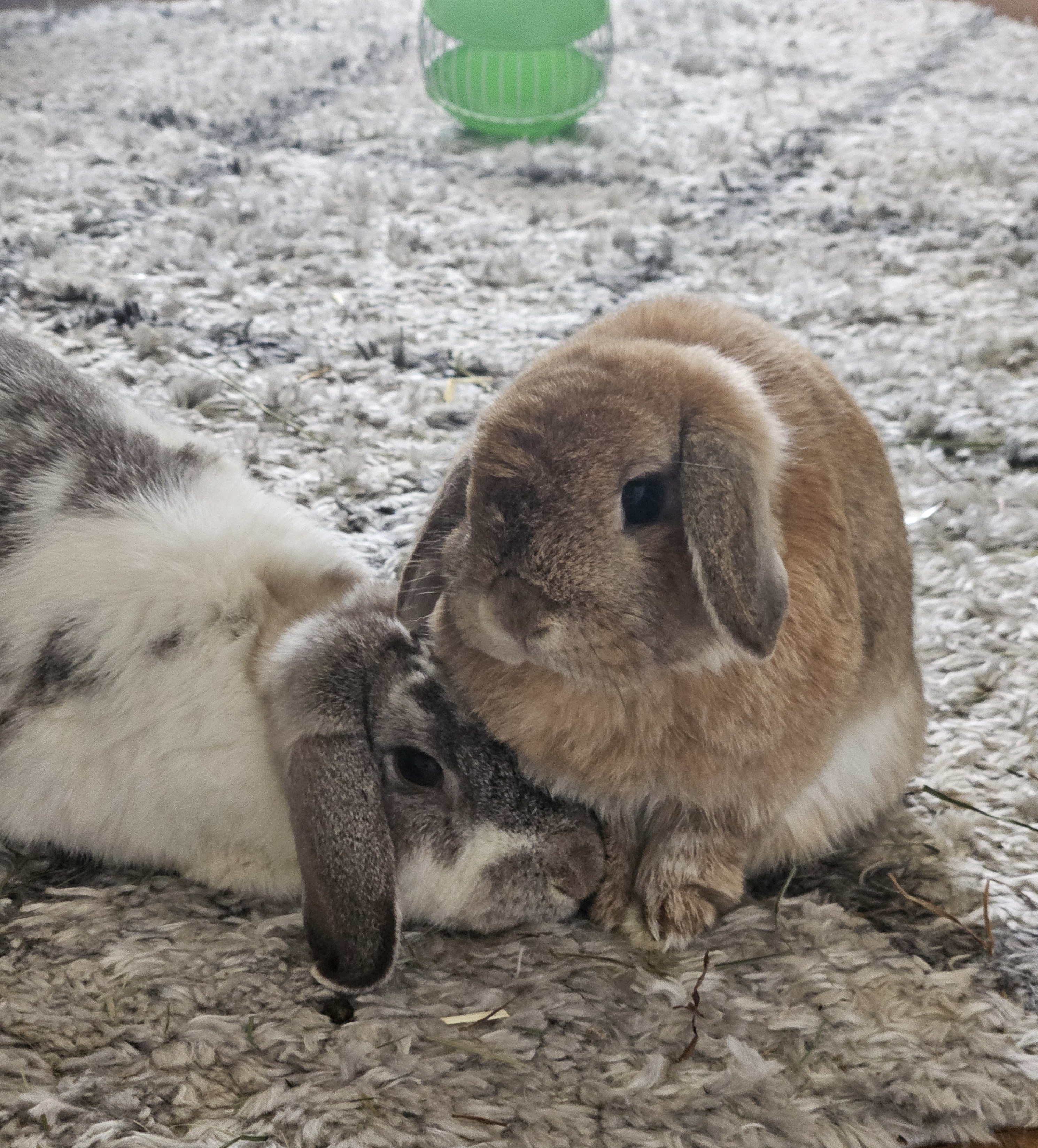 Chungus (the big one, obviously) and Puppy Dog, doing their best “we weren’t chewing on the baseboard” impression.
But I’ll be honest — rabbits are a different vibe from guinea pigs. Chungus will flop next to me on the floor and let me pet him for twenty minutes, but only when he decides it’s time. Puppy Dog still thumps at me if I rearrange anything in their space. Rabbits bond on their own terms. They’re more independent and can be standoffish until they fully trust you, which can take weeks or months.
Spaying or neutering is essentially required. Unaltered rabbits spray, show aggression, and female rabbits have an extremely high rate of uterine cancer if left intact. Budget $200 to $500 for the surgery, depending on your area.
Rabbits also have the most fragile digestive system of the three. GI stasis — where the gut stops moving — is the number one emergency I see in rabbits at the clinic. It can become life-threatening within hours. A rabbit-savvy exotic vet is non-negotiable.
Space requirements are the highest of the group. The House Rabbit Society recommends a minimum of 12 square feet of enclosure space plus daily free-roam time. Many experienced rabbit owners dedicate an entire room or rabbit-proof their living space. Chungus and Puppy Dog free-roam in my apartment, which means I’ve had to rabbit-proof every cord, baseboard, and houseplant in the place. Worth it, but it’s a lifestyle adjustment.
For more details, check out our rabbit care guide.
Hamsters: The Low-Maintenance Option
I don’t currently keep hamsters, but I’ve cared for dozens professionally at the clinic, and they have their own charm. They’re tiny engineers — give a hamster a pile of bedding and they’ll construct an elaborate burrow system overnight. It’s genuinely impressive.
With a lifespan of just 2 to 3 years, a hamster is a much shorter commitment — which can be a pro or a con depending on your perspective. For families with young children, the short lifespan means the loss conversation may come sooner than expected.
The most important thing to understand about hamsters is that they are nocturnal. They sleep during the day and run on their wheel at night. If you work a typical schedule and want a pet to interact with in the evenings, a hamster will just be waking up when you’re winding down. This mismatch is the number one reason hamsters get rehomed. I’ve seen it over and over at the clinic.
Most hamster species are solitary and should never be housed together. Dwarf hamsters are sometimes kept in pairs, but even that frequently leads to fighting and injuries. A single hamster in an appropriately sized enclosure is the safest setup.
Hamsters are small and fast, which makes them fragile and easy to drop. They’re not an ideal pet for young children. They can also nip when startled, especially if woken during the day — and trust me, they do not appreciate being woken during the day.
On the plus side, hamsters have the lowest space and cost requirements of the three. A proper hamster enclosure needs at least 600 square inches of unbroken floor space, and monthly costs for bedding, food, and chews run around $20 to $30.
Which Pet Is Right for You?
Choose a guinea pig if:
- You want a social, interactive pet that’s active during the day
- You can commit to 5 to 7 years of care
- You have room for a C&C cage (10.5+ square feet for a pair)
- You want a pet that vocalizes, shows affection, and has real personality
- You’re willing to adopt in pairs — because they truly need each other
Choose a rabbit if:
- You want a longer-term companion (8 to 12 years)
- You can provide free-roam time or a large dedicated space
- You’re comfortable with spay/neuter surgery and higher vet costs
- You want a litter-trainable, more independent pet
- You have experience with animals or are willing to do serious research first
Choose a hamster if:
- You have limited space and a smaller budget
- You want a lower-commitment pet (2 to 3 years)
- You’re okay with a nocturnal, mostly solitary animal
- You’re an older kid or adult who enjoys observing rather than handling
A Note on Adoption
Whatever species you choose, please consider adopting from a rescue. Guinea pigs, rabbits, and hamsters all end up in shelters regularly — often because someone didn’t research the commitment before buying. Rescues can also help match you with a pet that fits your personality and living situation.
If you’re leaning toward a guinea pig, our guinea pig adoption guide walks you through the entire process.
Ready to Learn More?
If you’re leaning toward a guinea pig (and honestly, I hope you are), start with our complete guinea pig care guide. You can also browse our small mammal resources page for recommended products, enclosures, and supplies. And if you’re in the San Francisco Bay Area, check out our pet care services — we offer in-home visits for guinea pigs, rabbits, and other exotic pets.